Democracy, Conflict Resolution, Foreign Policy
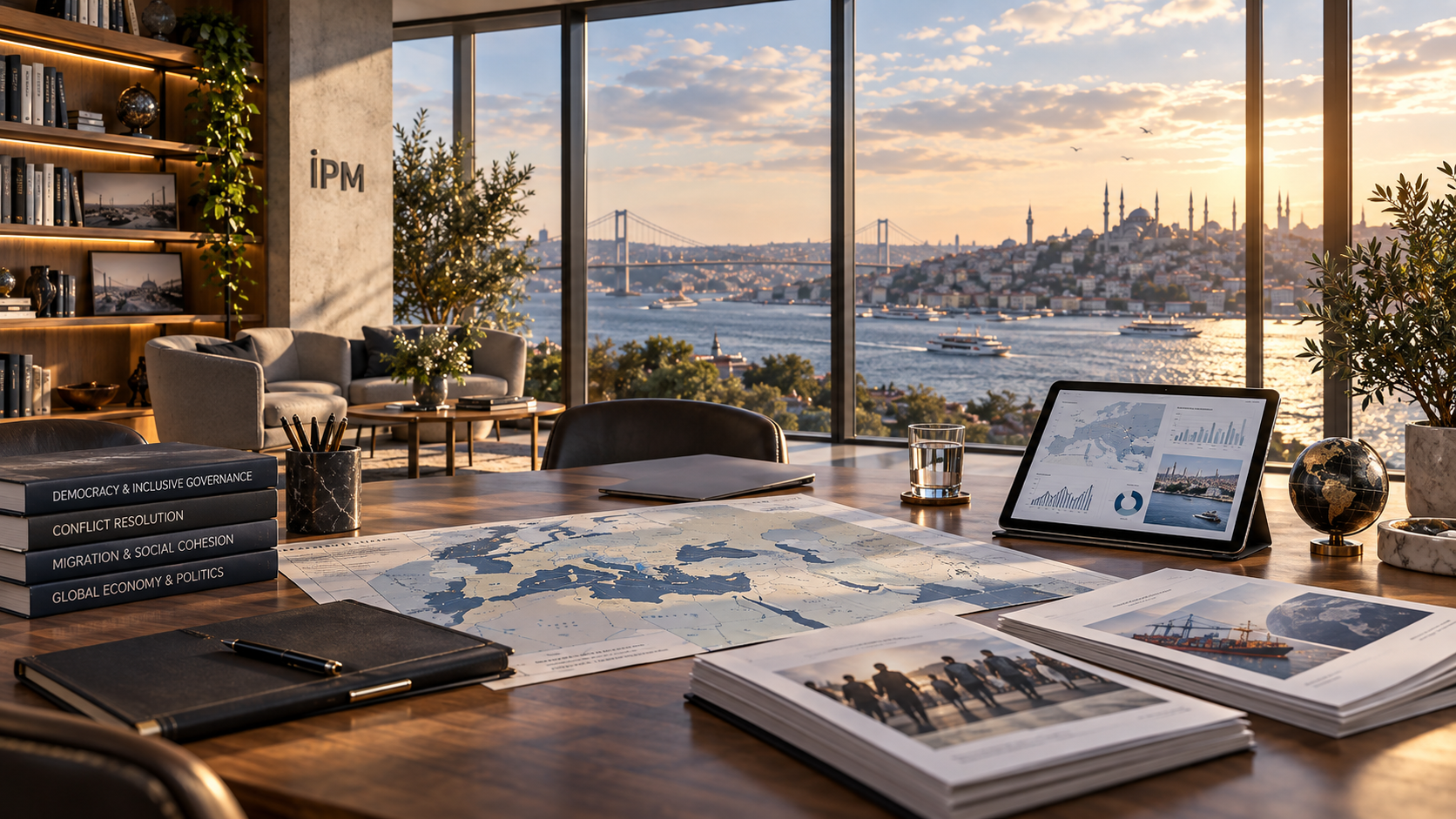 IPC takes a broad approach to democracy studies, covering party politics, electoral processes, institutional resilience, democratic innovation, and inclusive governance. IPC’s work in the field of conflict resolution concentrates on peacebuilding, mediation, reconciliation, migration, and social cohesion, building on IPC’s extensive experience with the political and social aspects of conflict. The foreign policy component of this cluster includes Turkey’s international stance, regional security issues, and the effects of global geopolitical changes on both domestic and international governance. Through research, public events, and strategic partnerships with academics, policymakers, civil society, and international organizations, IPC’s work in this area aims to enhance democratic governance, support peaceful conflict resolution, and promote informed and principled foreign policy decision-making.
#Democracy | #ConflictResolution | #GlobalPolitics | #GlobalEconomy | #Democratization | #Geoeconomics

Post-Coup Opportunities on Conflict Resolution and Democracy Project Press Conferences
The press conference of the "Post-Coup Opportunities on Conflict Resolution and Democracy Project Press Conferences" was held on April 27, 2017.
IKV-IPC Roundtable on Turkey-EU Relations
In coordination with the Economic Development Foundation (IKV), IPC organized the “IKV-IPC Roundtable on Turkey-EU Relations” on March 17, 2017 at the Brussels Representative of IKV.
Inclusive Growth and Political Consensus after July 15th Workshop
IPC Project Manager of Conflict Resolution and Mediation Stream Pınar Akpınar convened the workshop titled “Inclusive Growth and Political Consensus after July 15th” on March 3, 2017 at Diyarbakır.Cevdet Yılmaz, Minister of Development from 2011 to 2015 and the current Deputy Head of Publicity & Media of AKP and IPC Director Fuat Keyman gave the keynote speeches. The workshop was based on activities, which were coordinated by Pınar Akpınar. IPC Conflict Resolution and Mediation Stream Coordinator Bülent Aras, and IPC Researchers Derya Berk, Altay Atlı, and Ayşe Köse were participants at the workshop.The workshop was organized as part of the ‘Post-Coup Opportunities on Conflict Resolution and Democracy’ project, managed by Pınar Akpınar, which aims to identify what can be done to harness post-coup dynamics to help address the Kurdish issue and polarization in Turkey; and, influence policy-makers to adopt those recommendations. The project provides a platform to increase awareness and enhance dialogue through conflict identification, analysis and resolution by conducting field research, organizing workshops, analysing data, promoting discussion, and disseminating information.
"Reading John Stuart Mill in Istanbul: A Conversation with Timothy Garton Ash "
The Initiative and the Hrant Dink Foundation/Asulis Discourse, Dialogue, Democracy Laboratory convened the panel “Reading John Stuart Mill in Istanbul: A Conversation with Timothy Garton Ash” on Wednesday, February 15, 2017 at IPC. The panel was moderated by Fuat Keyman, Director of Istanbul Policy Center and Professor of International Relations at Sabancı University. Timothy Garton Ash, Professor of European Studies at University of Oxford and the author of Free Speech: Ten Principles for a Connected World; Ayşe Kadıoğlu, Professor of Political Science at Sabancı University; Yaman Akdeniz, Professor of Law at Istanbul Bilgi University; and Zeynep Arslan, Project Coordinator at Hrant Dink Foundation, participated as speakers.
"Reforming Turkey: Institution Building After July 15th "
IPC Project Manager of Conflict Resolution and Mediation Stream Pınar Akpınar and Conflict Resolution and Mediation Stream Researcher Derya Berk convened the workshop titled “Reforming Turkey: Institution Building After July 15th” on January 18, 2017 at IPC Karaköy.Turkey has been faced with a number of challenges since the failed coup attempt of July 15th. One of the greatest ones has been the weakening of its state institutions as a result of the decades old deployment of ‘parallel structures’ within these institutions as well as the massive wave of expulsions on the aftermath of the coup. ‘Reforming Turkey: Institution Building after July 15th’ identified and analyzed the key conflicts and challenges for institution building in the course of the post-coup period and offer possible solutions in order to contain polarization and foster inclusive democracy. Designed in an interactive format, the workshop brought together scholars and experts from diverse backgrounds and come up with solid policy recommendations for key stakeholders.
Polarization, Consensus and Democracy After July 15th
IPC Project Manager of Conflict Resolution and Mediation Stream Pınar Akpınar and Conflict Resolution and Mediation Stream Researcher Derya Berk convened the workshop titled “Polarization, Consensus and Democracy After July 15th” on January 17, 2017 at IPC Karaköy.Turkey has been experiencing an increased level of polarization in recent years. The 15 July 2016 coup attempt has left Turkey in a state of further uncertainty and deepened existing social and political dichotomies within the country. ‘Polarization, Consensus and Democracy after July 15th Workshop’ identified and analyzed the key conflicts that challenge the consolidation of Turkish democracy in the course of the post-coup period and offer possible solutions in order to contain polarization and foster inclusive democracy. A positive consequence of the coup attempt has been the emergence of a broad public consensus among different factions of the society on civilian rule as an undisputed norm. The workshop also explored opportunities vis-à-vis the sustainability of this rare atmosphere of unity by promoting dialogue. Designed in an interactive format, the workshop brought together scholars and experts from diverse backgrounds and come up with solid policy recommendations for key stakeholders.