Ayşe Kadıoğlu
Senior ScholarAyşe Kadıoğlu is Senior Scholar at Istanbul Policy Center. She is Deputy Member of the Board of Directors of the Hrant Dink Foundation in Istanbul and a member of the Advisory Board of the Bucerius PhD Scholarships Program in Migration Studies of Zeit Stiftung in Hamburg. She has been a regular participant of Yale Law School’s ongoing Middle East Legal Studies Seminar for eight years (since 2004). Kadıoğlu was one of the nine members of the Council of Europe’s Group of Eminent Persons in 2010-2011. She was a Visiting Scholar and Senior Associate Member at the University of Oxford, St Antony’s College in 2005 and 2009-2010. She was a Visiting Scholar at Stanford University’s Center for European Studies in 1992.
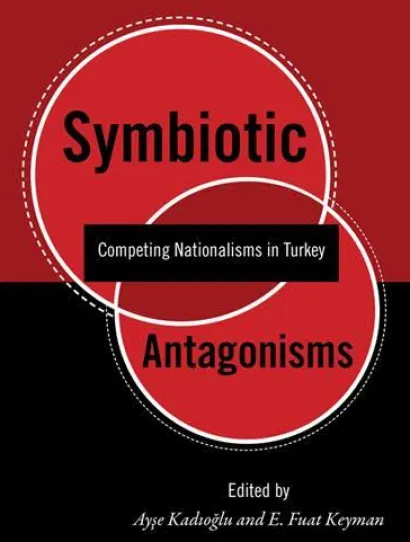
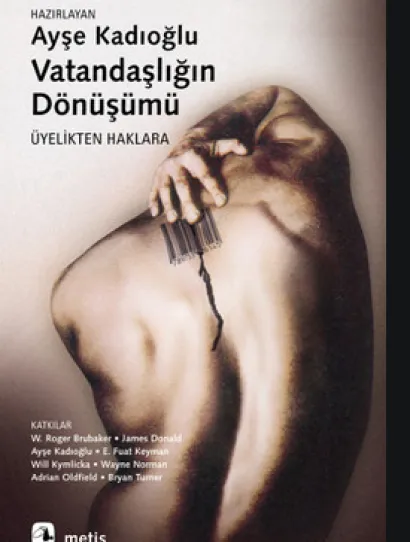
Ayşe Kadıoğlu is the author of various articles in Middle East Journal, Middle Eastern Politics, International Migration, Muslim World, Citizenship Studies, Critique: Critical Middle Eastern Studies, Middle East Law and Governance, Philosophy and Social Criticism. She is also the author and/or editor of the following books: Cumhuriyet İradesi-Demokrasi Muhakemesi: Türkiye’de Demokratik Açılım Arayışları (Republican Will-Democratic Reason: Search for a Democratic Disclosure in Turkey), Istanbul: Metis, 1999; Zaman Lekesi (Time Stain), Istanbul: Istanbul Bilgi Üniversitesi Yayınları, 2006; (author and editor) Vatandaşlığın Dönüşümü: Üyelikten Haklara (Transformation of Citizenship: From Membership to Rights), Istanbul: Metis, 2008; (co-editor with Fuat Keyman) Symbiotic Antagonisms: Competing Nationalisms in Turkey (Salt Lake City: The University of Utah Press, 2011); (co-editor with Kerem Öktem and Mehmet Karlı) Another Empire? A Decade of Turkey’s Foreign Policy Under the Justice and Development Party (Istanbul: Istanbul Bilgi University Press, 2012).
Kadıoğlu received her PhD in Political Science at Boston University (1990), MA in International Relations at the University of Chicago (1984), and a BS in Political Science at Middle East Technical University (1982).

Salgın ve Toplum - "Amerikan Seçimleri"
Koronavirüs salgını sebebiyle yaşanan bu süreçte sorunlara karşı birlikte çözüm bulmak, olası ortak zeminleri analiz etmek ve akademik araştırmalarla desteklenen fikir alışverişi için düzenlediğimiz "Salgın ve Toplum" webinar serisinin "Amerikan Seçimleri" başlıklı toplantısı Senem Aydın-Düzgit, Şebnem Gümüşcü, Ayşe Kadıoğlu, Fuat Keyman'ın katılımıyla 3 Kasım'da gerçekleşti.IPC organized the webinar Salgın ve Toplum - "Amerikan Seçimleri" with the participation of Senem Aydın-Düzgit, Şebnem Gümüşcü, Ayşe Kadıoğlu and Fuat Keyman on November 3.

Pandemic and Society Webinar Series - "The Post-Corona World Order: Justice, Equality, and Fundamental Freedoms"
The meeting titled “Post-Corona World Order: Justice, Equality, and Fundamental Freedoms” as part of the "Pandemic and Society" webinar series, which we organized to find collective solutions to problems, analyze potential common ground, and exchange ideas supported by academic research during the Coronavirus outbreak, took place on June 15th with the participation of Ayşe Kadıoğlu, Çağlar Keyder, Fuat Keyman, and Şebnem Gümüşcü.

Ademimerkeziyet Elkitabı Launch
IPC Senior Scholar Cengiz Aktar’s book titled Ademimerkeziyet Elkitabı was launched on May 13, 2016 at IPC. Ayşe Kadıoğlu participated as a discussant.
European Muslims in Daily Life
2014/15 Mercator-IPC Senior Fellow Nilüfer Göle’s book titled Gündelik Yaşamda Avrupalı Müslümanlar (European Muslims in Daily Life) was launched on February 3, 2016 at IPC.
Urban Citizenship in Turkey
The Istanbul Policy Center-Sabanci University-Stiftung Mercator Initiative held a meeting titled Citizenship in Turkey with Nilüfer Göle and Fuat Keyman on March 4, 2014. Ayşe Kadıoğlu moderated the meeting.In Turkey, the concept of citizenship is largely evaluated in terms of individuals' duties to the nation-state. Moreover, citizenship is mostly defined through ethnic or cultural categories. However, both the concept of equal citizenship, which began to be discussed during the new constitution efforts and the resolution process last year, and the relationship between citizens and cities, which began to be debated with the Gezi protests, have created a suitable ground for rethinking the concept of citizenship. In this context, at our meeting, we focused on the concept of “urban citizenship” and tried to find answers to the question “What kind of citizenship?”