Jannes Tessmann
2018/19 Mercator-IPC FellowJannes Tessmann is a political scientist working on the governance of global industries. His research explores how states and private sector organizations regulate globally dispersed production networks and how these public and private forms of governance interact with each other. His regional focus is on West Africa, India, and Turkey. Throughout his academic career he has applied his research in various consulting activities for the Deutsche Gesellschaft für Internationale Zusammenarbeit (GIZ) and for labor rights advocacy groups, such as the Clean Clothes Campaign Turkey.
Tessmann studied in Cologne and Istanbul, and has begun his PhD at the University of Cologne with a scholarship from the Hans-Böckler-Foundation. For his PhD, he has carried out fieldwork in Ivory Coast and India, where he was a visiting scholar at the Tamil Nadu Agricultural University.
Project: “Multi-scalar Labor Governance in EU-Turkey Garment Value Chains: Challenges and Potentials for Workplace Integration of Refugees”
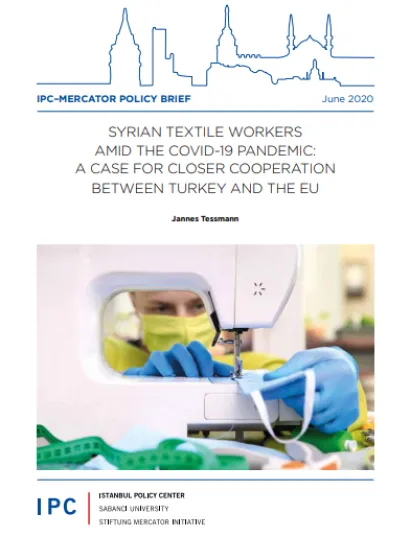
The Turkish garment industry has become a major source of income for Syrian refugees. It is estimated that up to 400,000 Syrians are currently working in Turkish garment factories, with more than 90 percent being informally employed. This has significant social and economic implications for Turkey and EU-Turkish relations. Apart from imperatives to improve working conditions for refugee workers, Turkish policy makers have to address fears among Turkish citizens that the influx of Syrians into Turkish labor markets has led to job scarcity and downward pressure on wages. Furthermore, EU-based garment brands have come under pressure to ensure that refugees are not exploited in Turkey, which represents the third largest manufacturer of apparel for the EU.
Against this background, this project seeks to determine how legal employment opportunities for refugee workers can be improved in a collaborative effort between EU-based apparel brands, Turkish industry representatives, and policy makers. In order to find sustainable solutions, interviews with industry representatives and policy makers center around two primary questions: What are the challenges and potentials for formal workplace integration of refugees in Turkey-EU garment value chains? How can regulatory reforms promote the formal integration of refugee workers into the Turkish garment industry?