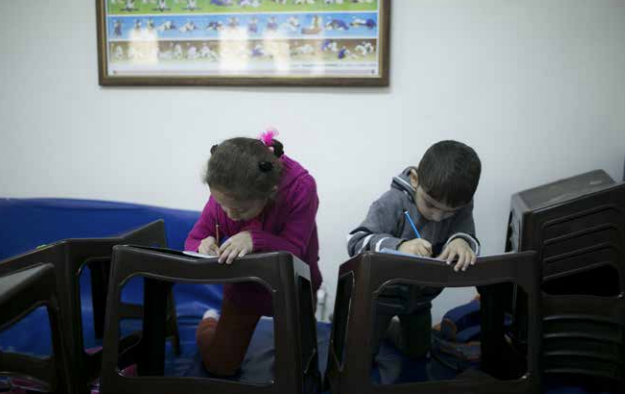
Between Fostering and Outsourcing Educational Justice: The EU-Turkey Statement and Its Impacts on the Education of ‘Refugee Students’ in Turkey
Executive Summary
The policy note by Ellen Kollender, a 2019/20 Mercator-IPC Researcher, entitled “Between Fostering and Outsourcing Educational Justice: The EU-Turkey Statement and Its Impacts on the Education of ‘Refugee Students’ in Turkey”, was published in September 2021.
Introduction
March 2021 marked the fifth anniversary of the EUTurkey Statement. Since its adoption, the statement has been discussed from diverse perspectives and positions. While the primary focus has been on the statement’s asylum and security policy program as well as its role in strengthening the European Border Regime, so far little attention has focused on the statement’s relevance for education policies and processes dealing with the effects of forced migration on the Turkish education system. A closer look at the consequences of the so-called EU-Turkey Deal for the education of young people experiencing forced migration seems especially pressing as numerous programs, projects, and collaborations within the agreement are aimed at increasing the participation of “refugee children and youth” in the Turkish education system. One-third of the approximately 4.1 billion euro earmarked by the European Union (EU) under the Facility for Refugees in Turkey to date has been transferred to education-related projects. A huge part of this education expenditure was allocated to inter- and supranational organizations such as the World Bank, the Kreditanstalt für Wiederaufbau (KfW), and the United Nations Children’s Fund (UNICEF). These organizations are pursuing various education projects in cooperation with the Turkish Ministry of National Education (MoNE), non-governmental organizations (NGOs), and local initiatives. All have played a significant role in restructuring the educational landscape in Turkey in recent years.
Conclusion and Recommendations
This policy brief aimed to illustrate some linkages between current developments in the global education system and local educational activities of NGOs in Turkey. As shown here, the logics of a New Educational Governance shape educational thinking and practice regarding students experiencing forced migration in various ways. The private sector is increasingly present in the education networks that have emerged in the context of the EUTurkey Statement, and assessments of the quality of EU-supported education programs are made using statistics and quantitative data, conveying the assumption that the numbers speak for themselves. As a result, systemic aspects crucial to educational justice and a complex interplay of political, judicial and societal factors influencing the quality of education and that might uncover the need for different forms of intervention and collaboration between the EU, NGOs, and nation-state actors are relegated to the background. Thus, despite the emphasis on comprehensive approaches in many international agreements at the EU and UN levels, inclusive education as it applies to refugee children and youth, and particularly those who identify as LGBTI+, is largely relegated to the margins in the design of EU-funded education programs and projects. In fact, EU-funded projects partly promote a national education policy that largely excludes non-Syrian minors experiencing forced migration from the Turkish education system. This policy also risks promoting the assimilation of children experiencing forced migration into a mono-cultural Turkish education system as well as an anti-LGBTI+ discourse fostered by the governing parties in Turkey.
Publication Date
September 2021
Number of Pages
12

Ellen Kollender
Ellen Kollender is a post-doctoral researcher focusing on educational inequalities in immigration societies, especially on how dynamics of racism and neoliberalism impact social justice and equity in urban school settings.
ellen.kollender@sabanciuniv.edu