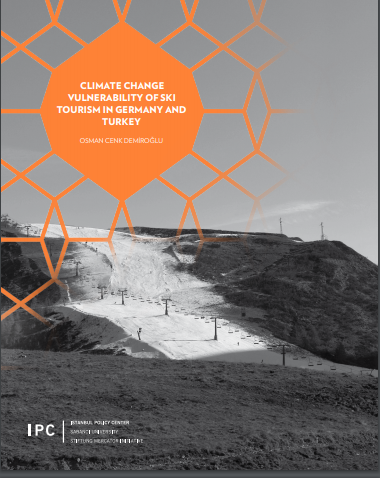
Climate Change Vulnerability of Ski Tourism in Germany and Turkey
Executive Summary
Contemporary climate change, or global warming, is one of the most significant challenges facing the world. Its impacts are already being felt across natural and human systems and are expected to continue, largely with negative consequences. As one of the largest sectors of the global economy, the tourism industry is also increasingly vulnerable to the effects of climate change. Ski tourism, in particular, is among the most at-risk subsectors due to its high exposure and sensitivity to changing climatic conditions and its relatively limited adaptive capacity.
This report begins by reviewing the existing literature on the vulnerability of ski tourism to climate change before examining two national case studies. It first explores Germany, one of the world's leading ski tourism destinations and a country that has played a prominent role in climate change mitigation for more than a decade, drawing on relevant research and practical experiences.
Building on these benchmark examples, the report assesses the vulnerability of Turkey's ski tourism sector, which has experienced rapid growth in recent years. By comparing the two cases, the study identifies key scientific and practical gaps and offers implications, conclusions, and recommendations to strengthen the resilience of ski tourism in the face of climate change.
Publication Date
April 2016
Page Count
50

Osman Cenk Demiroğlu
Osman Cenk Demiroğlu is a tourismologist and geographer. His research focuses on issues of sustainability and feasibility within the tourism and hospitality industry.
demirogluc@yahoo.com