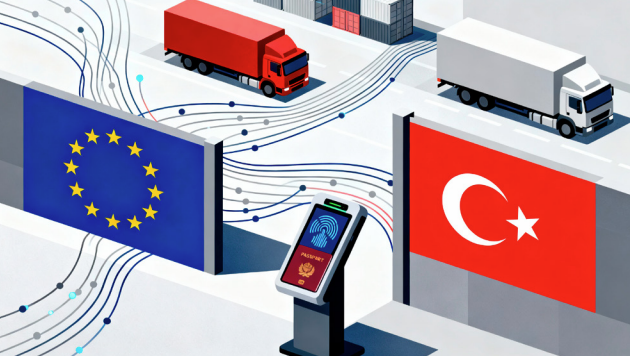
The Digitalization of Customs and Borders Between the EU and Turkey: A 'Technical Bridge' to Unblock Visas and the Customs Union?
Conclusions
A possible approach in the short- to mid-term could involve launching pilot projects between administrations, between the EU and Turkey, to automatically exchange non-customs certificates through the European Single Window. Additionally, publishing an EU-Turkey dashboard with clear key performance indicators (such as timeliness, data quality, automation, and digital certificate issuance) would be beneficial. Linking performance to incentives by proactively applying the visa cascade, implementing trusted traveler lanes at border crossings, and making targeted updates to the Customs Union in digital chapters or services where value is demonstrated can create a virtuous circle of trust and practical benefits. As already mentioned, there is an operational precedent, the electronic A.TR certificate, which was temporarily adopted between Turkey and the EU during the pandemic and was later officially adopted to track the movement of goods between the EU and Turkish customs. This demonstrates that when emergencies occur and clear benefits for operators are presented, policies tend to adapt. Gradually extending this model to other areas could help turn the digital space into a foundation of negotiated trust for visas and customs unions. In more ordinary times, gradually extending this model to other areas would not resolve the underlying political disputes, but it could anchor visa and customs cooperation in measurable outcomes, such as faster clearance, fewer errors, and more predictable travel, rather than in purely declaratory commitments.
Publication Date
December 2025
Number of Pages
8