Ending Up in a Cul-de-Sac?: Critical Junctures in the EU-Turkey “Deal” on Its Sixth Anniversary
Introduction
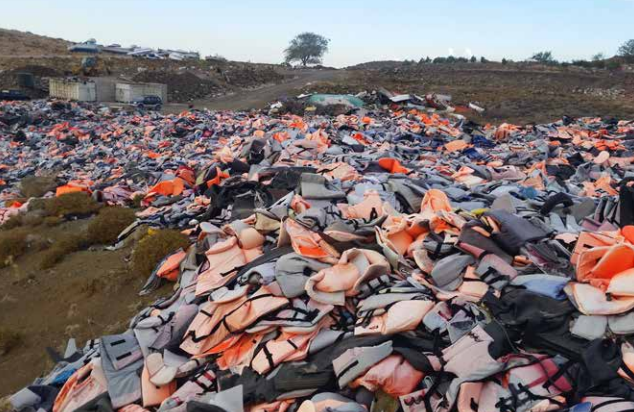
In 2011, the Syrian civil war broke out as part of the domino effect triggered by the Arab Spring. Consequently, millions of people have since been displaced, fleeing from persecution, violence, war, conflict, and hunger throughout the last decade. Reaching its climax in the summer of 2015, the mass movement of refugees has not only come to define the relationship between Turkey and the EU but also concomitantly become a landmark in the reconstruction of political landscapes across Europe and its periphery, including Turkey. As reported by the International Organization for Migration (IOM), 3,771 refugees1 perished in the Agean region during 2015, a tragedy that eventually stirred the attention of international civil society through the widely circulated photo of Alan Kurdi. In the summer of 2015, more than 1.2 million people had arrived inside EU territories,2 and the mass movement of refugees was framed as a “refugee crisis” that called for an immediate response.
Conclusion
In the year 2021, amid these exacerbating challenges, the EU-Turkey Statement expired on its fifth anniversary. Still, a new agenda is not on the table as we approach the sixth year of the “deal”. Having passed through plenty of ups and downs and critical junctures, the current moment manifests the remarkably peculiar nature of such a “deal” compared to the context in 2016. In conjunction with the aforementioned dynamics discussed throughout the analysis, the Taliban’s takeover of Afghanistan and subsequent atmosphere in Turkey throughout the year 2021 have made the already thorny conditions even more inextricable.
Publication Date
March 2022
Number of Pages
17
