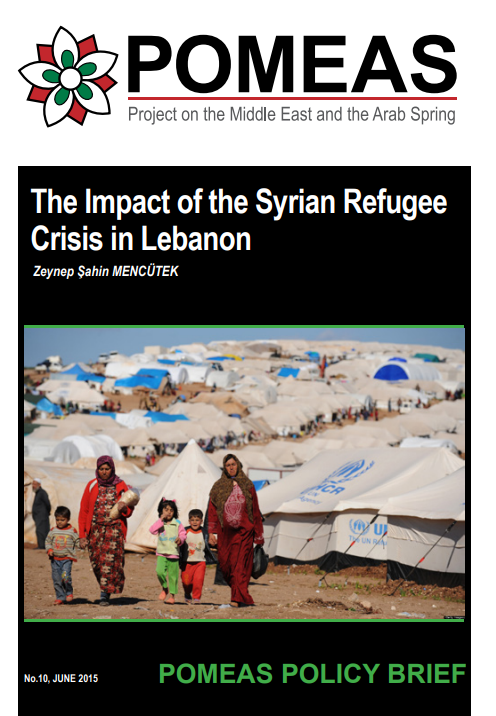
The Impact of the Syrian Refugee Crisis in Lebanon
Executive Summary
One of the most dramatic consequences of the Syrian civil war has been the massive displacement of civilians both within and outside Syria. Syrian refugees now constitute more than a quarter of Lebanon’s population. Although the Lebanese government declared a policy of disassociation, presenting a position of neutrality regarding Syria, this approach has been undermined by the presence of numerous actors with competing interests.
The influx of refugees has had significant impacts on Lebanon’s national security and economy, contributing to further instability. Refugee flows have placed substantial pressure on public service delivery, including education, healthcare, housing, sanitation, water, and electricity, as well as on physical infrastructure that lacks sufficient capacity.
Competition in the labor market and perceptions that Syrians receive different financial treatment have generated mixed attitudes and resentment among local communities. Concerns among both the government and the public regarding the Syrian crisis and refugees may increase sectarian tensions and deepen existing divisions, given the long and troubled history of Syria-Lebanon relations and Hezbollah’s growing involvement in Syria.
One of the most serious potential risks is the militarization of refugee communities. A strong government structure, combined with regional and international support, is essential for Lebanon to maintain stability in such a destabilizing environment.
Publication Date
June 2015
Page Count
11