Policies and Role of Turkey on Peacebuilding
Executive Summary
Turkey’s status as an emerging actor is rooted in its steady political and economic development during the early years of the 21st century, as well as the weakening of the Western, rule-based liberal order. This transformation has enabled regional actors with relative economic stability and security to assume responsibilities that were traditionally carried out by major powers during the Cold War era. Similar to many BRICS countries and other regional leaders, Turkey has benefited from this global shift. Turkey also shares with several emerging powers the experience of achieving a successful transition toward democracy, economic growth, and stability within a relatively short period.
As the international system moved toward greater multipolarity, Turkey utilized its religious, ethnic, and cultural connections to strengthen its soft power both within its region and beyond. During this period, Turkey increased its regional influence and strengthened its position as an emerging power, particularly as the Arab Spring created new opportunities, crises, and conflicts along its borders. The country has sought to reinforce this role through investments in development cooperation and efforts to promote peaceful conflict resolution in its surrounding region.
These experiences, together with Turkey’s status as a European Union candidate country and a committed NATO ally, have increased its potential role in facilitating regional peace and reinforced its position as a bridge between different geographical and cultural spheres. As a Western-oriented, secular, and predominantly Muslim country, Turkey is increasingly viewed as a key actor in addressing both humanitarian and security challenges arising from prolonged conflicts in Syria and the broader Levant region. Turkey hosts approximately 2.2 million Syrian refugees while simultaneously supporting the anti-ISIS coalition through measures such as opening its airbases, training opposition forces, and participating in air operations.
Despite these developments, Turkey’s history has also been shaped by significant insecurity and periods of economic and political instability, including four military coups and a three-decade-long armed insurgency. Therefore, while Turkey’s current activities are supported by shifting economic and international power dynamics, its understanding and approach to peacebuilding remain deeply influenced by its own historical experiences with insecurity.
Publication Date
October 2015
Page Count
11
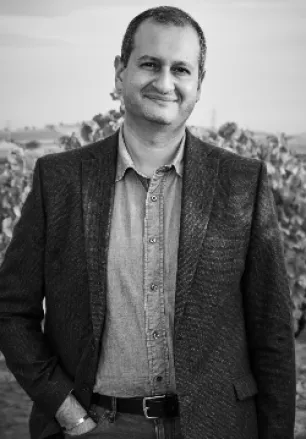
Onur Sazak
Onur Sazak is Turkey-based Project Coordinator at the International Press Institute (IPI). Prior to joining IPI, Sazak coordinated the Philanthropy Infrastructure Development in Turkey project at The Third Sector Foundation of Turkey (TUSEV) from September 2019 to May 2021. He has also worked at Open Society Foundations Turkey, Istanbul Policy Center at Sabancı University, Hudson Institute, and Brookings Institution in different capacities ranging from research manager to program associate for over a decade and a half.