Introduction
While the likelihood of remaining below the threshold of 1.5 ◦C global warming set out in the Paris Agreement diminishes, recent evidence suggests that climate change impacts are already experienced by vulnerable communities in the form of increasingly frequent and intense extreme events. Home to over half of the world’s population, urban areas have been prioritised as key for climate change adaptation (Reckien et al., 2017; Bulkeley and Castan ´ Broto, 2013; Bulkeley et al., 2014; Bai et al., 2018). Particularly urban areas in coastal regions will be highly susceptible to the impacts of climate change due in part to sea-level rise and changing coastal climate systems, as well as the impacts of urbanisation and establishment of human settlements in environmentally hazardous areas (IPCC, 2022; Olazabal et al., 2019; Abadieet al., 2016). It is for these reasons that urban populations without sufficient resources to adequately respond are considered the most vulnerable societal groups to climate change impacts (IPCC, 2022; Bai et al., 2018; Chu et al., 2017; Satterthwaite et al., 2020). To redress social vulnerability in just ways, urban climate change adaptation efforts depend on (i) participation, (ii) capacity enhancement, (iii) governance, and (iv) justice integration into spatial planning (Shi et al., 2016). While there have been recent efforts to assess equity and justice in urban resilience and sustainability planning (Chu and Cannon, 2021; Fitzgibbons and Mitchell, 2019; Hess and McKane, 2021; Westman and Broto, 2021; Ziervogel et al., 2017), and more particularly in urban adaptation planning (Fiack et al., 2021), few studies developed structured and replicable evaluations of the degree in which justice is considered in urban adaptation planning processes.
Publication Date
July 2022
Number of Pages
10
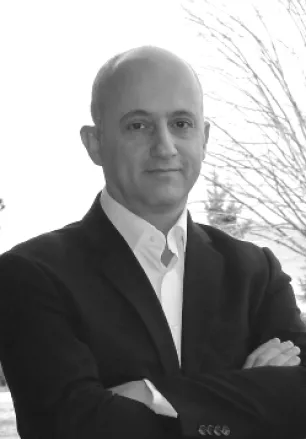
Ümit Şahin
Ümit Şahin is Senior Scholar and the Head of Climate Change Program at Istanbul Policy Center.
umit.sahin@sabanciuniv.edu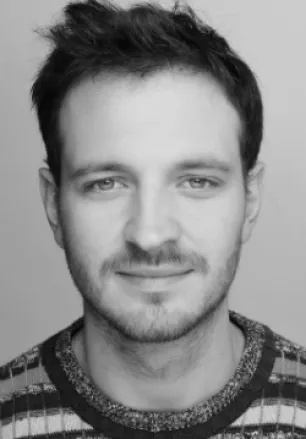
David Samuel Williams
David Samuel Williams was born in Germany to British and Irish parents. David studied for a BSc in Geography at the University of Salford, Manchester, before completing an MSc in Global Transformation and Environmental Change at the University of Hamburg.
david.williams@posteo.net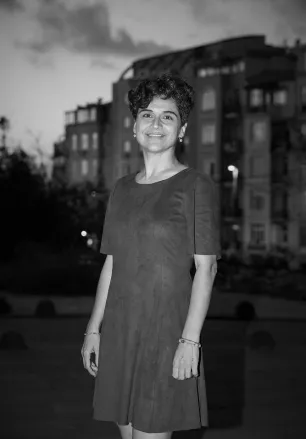
Akgün İlhan
Akgün İlhan is an academic and researcher who has worked on water management, environmental policy and climate change since 2006.
akgun.ilhan@sabanciuniv.edu
Hande Paker
Hande Paker is a political sociologist based at the Faculty of Economics, Administrative and Social Sciences at Bahcesehir University.
hpaker@gmail.com
Ethemcan Turhan
Ethemcan Turhan is an assistant professor at the Faculty of Spatial Sciences, University of Groningen. He was previously a postdoctoral researcher at KTH (Royal Institute of Technology) Environmental Humanities Laboratory, Division of History of Science, Technology and Environment between 2016 and 2020.
e.turhan@rug.nl