"Sparks" and Global Leaders: Civil Initiatives as Emerging Actors in Turkey's Diaspora Governance
Introduction
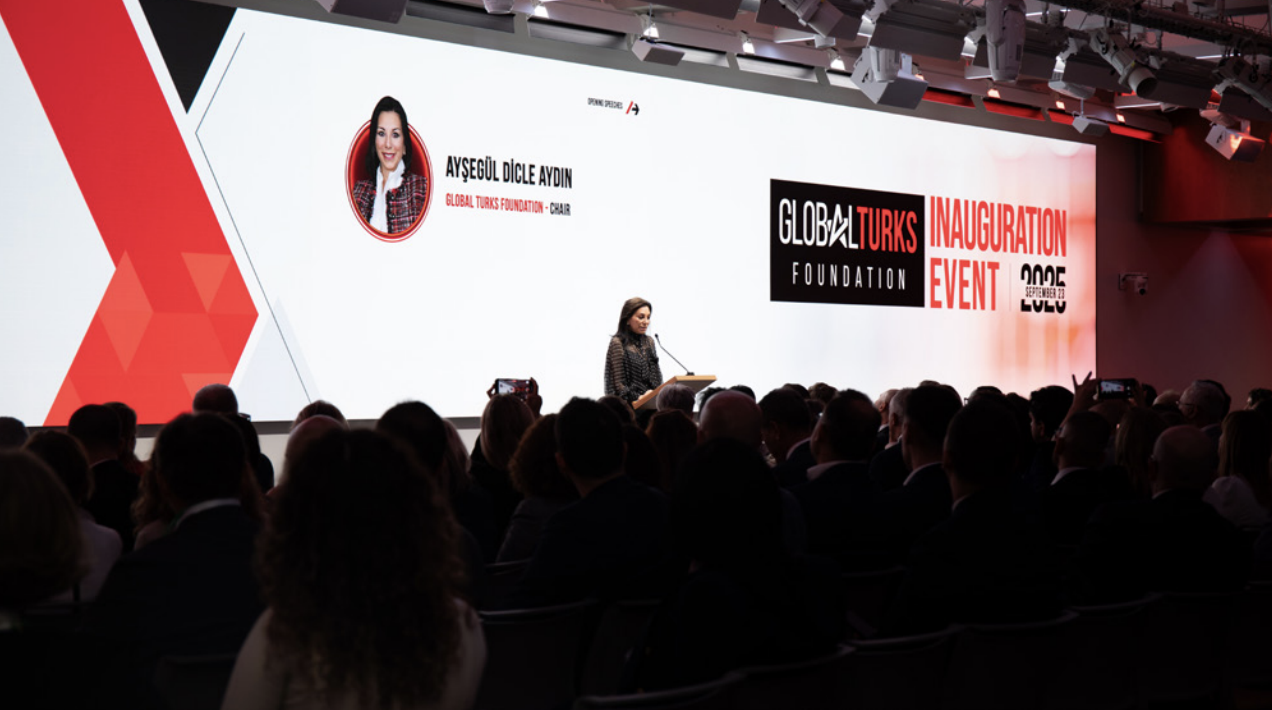
In November 2025, two events took place that, taken together, signal a shift in how, and by whom, Turkey’s highly skilled diaspora is being engaged. On November 28, 2025, the Global Turks Foundation, “an independent, non-governmental and non-partisan platform that unites successful Turkish leaders and professionals worldwide,” was formally launched in Istanbul, unveiling a global leadership academy aimed at cultivating what it calls the “Globally Successful Turkish Leader” brand.1 One day earlier, Bi’ Dünya Kıvılcım Derneği (A World Spark Association), a civil society organization of Turkish engineers and professionals living abroad whose name invokes an early Republican-era metaphor for students sent abroad as kıvılcımlar (sparks), convened its second online Kıvılcım Zirvesi (Sparks Summit), drawing around 2,000 participants particularly from Europe, North America, and the Gulf, around the theme “From Brain Drain to Brain Power.”2 Distinct in structure and objectives, these two initiatives nonetheless share a common ambition: to mobilize Turkey’s highly skilled diaspora on terms that are neither defined nor mediated by the state.
Turkey’s Diaspora Engagement Policies and Highly Skilled Emigrants
Since the early 2000s, Turkey has undergone a marked shift in its approach toward emigrants, moving from a largely reactive or indifferent stance to an explicit policy of proactive diaspora engagement. This reorientation was institutionalized with the establishment of the Presidency for Turks Abroad and Related Communities (YTB) in 2010, operating first under the office of the Prime Minister and since 2018 under the Ministry of Culture and Tourism. While affairs related to emigrants and diasporas had previously been managed primarily by the Ministry of Foreign Affairs alongside other relevant ministries, YTB introduced a new coordination model spanning various ministries and state institutions, funding diaspora-oriented civil society organizations and managing consultative relations with communities abroad.6 This architecture was complemented by the expansion of specialized bodies including the Yunus Emre Institutes, the World Turkish Business Council (DTİK), the Turkish Cooperation and Coordination Agency (TİKA), the overseas branch of Presidency of Religious Affairs (Diyanet), and more recently the Maarif Foundation. Despite inclusive rhetoric from these organizations, this new institutionalization has been characterized by strong centralization, ideological selectivity, and a narrative of loyalty to one’s homeland closely aligned with the ruling Justice and Development Party’s (AKP) broader political project, privileging conservative-nationalist networks and actors aligned with government priorities.
Governance Beyond the State: New Modalities of Engagement and Their Limits
Taken together, the cases of Bi’ Dünya Kıvılcım Derneği and the Global Turks Foundation suggest an emerging, if still tentative, shift: diaspora governance may no longer remain an exclusively state-managed domain. Professional associations and networks of Turkish emigrants have existed in the United States and Europe for decades, yet these earlier formations mostly tended to be locally anchored, oriented toward the professional integration of their members in countries of residence, and largely disengaged from explicit agendas focused on their contributions to Turkey. What distinguishes the two initiatives examined here is their explicitly transnational orientation and their deliberate engagement with Turkey’s economic, technological, and policy landscape, positioning overseas expertise not merely as a personal asset but as a transnational resource to be strategically mobilized. Both appear to be working outside Turkey’s official diaspora framework, setting agendas, producing and classifying knowledge, distributing symbolic capital, and coordinating transnational professional networks through modalities that differ from those of the state. Through the kıvılcım metaphor’s reinterpretation of a “virtual return” and the framing of “Global Turks” as strategic assets, they transform the narrative of brain drain from national loss into a transnational resource of symbolic capital. By operating at the intersection of municipal governance, private sector ecosystems, and elite professional networks, these initiatives have opened an alternative venue alongside traditional loyalty-based frameworks, one in which highly skilled emigrants are addressed in relation to their professional merit and transnational contribution rather than in relation to allegiance or loyalty.
Publication Date
March 2026
Number of Pages
10