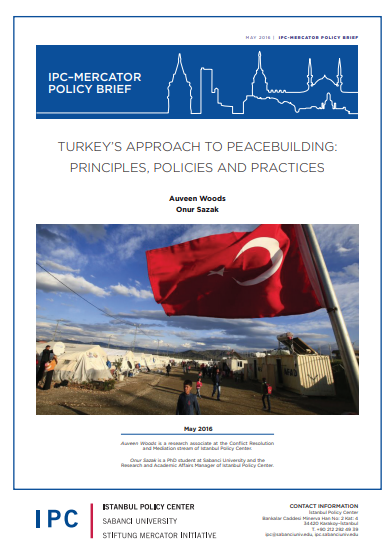
Turkey’s Approach to Peacebuilding: Principles, Policies, Practices
Executive Summary
Turkey's emergence as an influential regional actor has been driven by its sustained political and economic development during the early years of the twenty-first century, together with the gradual weakening of the Western-led liberal international order. These developments have enabled countries with relative economic stability and regional influence to assume responsibilities that were once largely carried out by major global powers. Like many other emerging powers, Turkey has benefited from this changing international environment while experiencing rapid economic growth, political reform, and increased regional influence.
As the international system has become increasingly multipolar, Turkey has sought to strengthen its soft power by drawing on its religious, ethnic, and cultural ties both within its neighbourhood and beyond. The opportunities and challenges created by the Arab Spring further elevated Turkey's regional profile, placing it at the centre of significant political transformations and conflicts across the Middle East.
Turkey's status as a candidate for European Union membership, a longstanding NATO ally, and a strategic bridge between Europe and the Middle East has reinforced its role in regional peace facilitation. As a secular state with a predominantly Muslim population, Turkey has increasingly been viewed as an important actor in addressing both the humanitarian and security dimensions of conflicts, particularly those arising from the Syrian civil war. Alongside hosting millions of Syrian refugees, Turkey has supported opposition groups in Syria and contributed to international efforts against the Islamic State by allowing coalition partners to use its military facilities.
The report argues that Turkey's contemporary approach to peacebuilding is shaped not only by changing global power dynamics but also by its own historical experiences of political instability, military interventions, economic challenges, and prolonged internal conflict. These domestic experiences have significantly influenced the country's understanding of security, conflict resolution, and peacebuilding in both regional and international contexts.
Publication Date
May 2016
Page Count
13
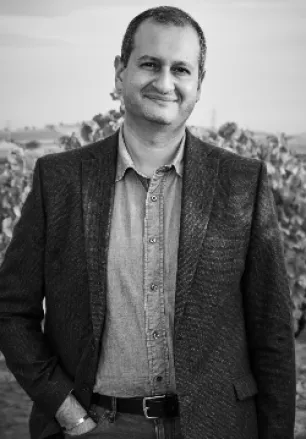
Onur Sazak
Onur Sazak is Turkey-based Project Coordinator at the International Press Institute (IPI). Prior to joining IPI, Sazak coordinated the Philanthropy Infrastructure Development in Turkey project at The Third Sector Foundation of Turkey (TUSEV) from September 2019 to May 2021. He has also worked at Open Society Foundations Turkey, Istanbul Policy Center at Sabancı University, Hudson Institute, and Brookings Institution in different capacities ranging from research manager to program associate for over a decade and a half.