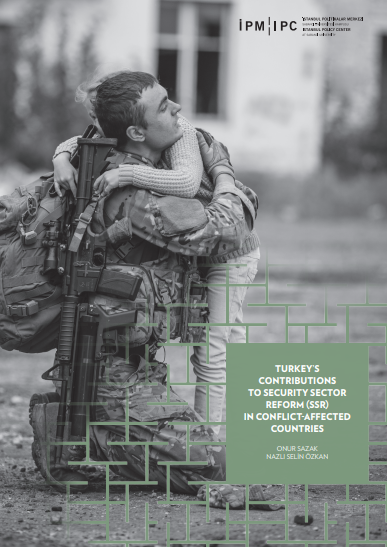
Turkey’s Contributions to Security Sector Reform (SSR) in Conflict-Affected Countries
Executive Summary
Since the early 1990s, Turkey has played an active role in international peace operations by contributing military personnel, expertise, and technical assistance to numerous United Nations (UN) and North Atlantic Treaty Organization (NATO) missions. Its participation ranged from peacekeeping operations in Somalia to extensive involvement in the Balkans, establishing Turkey as a significant contributor to international peacekeeping efforts.
During the early 2000s, a series of international and domestic developments led Turkey to broaden its approach to peace operations beyond traditional military contributions. The global impact of the September 11 terrorist attacks and the Justice and Development Party's (AKP) rise to power in 2002 fundamentally reshaped Turkish foreign policy and expanded the country's engagement in both security and humanitarian dimensions of peacebuilding.
Turkey's participation in the NATO-led International Security Assistance Force (ISAF) mission in Afghanistan marked a turning point in this transformation. By assuming leadership roles in both civilian and military components of the mission, Turkey adopted a more comprehensive peacekeeping approach that incorporated elements of security sector reform alongside conventional military support.
At the same time, Turkey pursued a more proactive foreign policy centred on humanitarian diplomacy, development assistance, the promotion of governance institutions, stronger commercial relations, and cultural engagement with neighbouring regions. As a result, Turkey significantly expanded both its humanitarian assistance and long-term development aid to conflict-affected countries. While Afghanistan, South Sudan, Somalia, and more recently Syria became major recipients of Turkish assistance, the country's official and private aid activities gradually extended across multiple regions, reaching countries from Myanmar to Haiti.
Publication Date
November 2016
Page Count
22
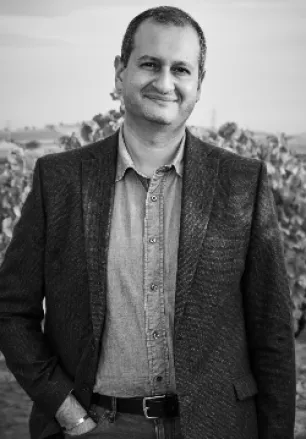
Onur Sazak
Onur Sazak is Turkey-based Project Coordinator at the International Press Institute (IPI). Prior to joining IPI, Sazak coordinated the Philanthropy Infrastructure Development in Turkey project at The Third Sector Foundation of Turkey (TUSEV) from September 2019 to May 2021. He has also worked at Open Society Foundations Turkey, Istanbul Policy Center at Sabancı University, Hudson Institute, and Brookings Institution in different capacities ranging from research manager to program associate for over a decade and a half.