
Zappa Zamanlar IPC Special Series
Zappa Zamanlar IPC Special Series
Loneliness, Lack of Future, and Youth's Objection" analyzes youth mobility in Turkey through socio-psychological and political ethnographic perspectives, based on interviews conducted in collaboration with the Istanbul Policy Center and Medyascope. The study correlates youth participation in social protests not only with economic and political factors but also with phenomena such as deep social isolation, loss of self-confidence, and structural insecurity based on data from the "World Happiness Report 2025." It is stated that the perception of a lack of future, arising from a crisis of representation and lack of meritocracy, politicizes youth around the concept of "freedom," which they see as the last refuge, and codes this situation as an objection to limited democratic options presented as a "fixed menu." Consequently, the analysis evaluates the events in front of Istanbul University as a symbolic threshold and argues that youth should be positioned as "subjects of today, not tomorrow," and that social transformation is only possible through the strengthening of structural participatory mechanisms.
Publication Date
April 2025

Cana Tülüş Türk
Cana Tülüş Türk has been working at the Istanbul Policy Center as an Academic and Administrative Affairs Lead since January 2012. She also teaches comparative politics, contemporary issues in the EU, and the current state of democracy in different universities. She also works as an expert on projects funded by Think Civil, CEPS, and GMF Black Sea Trust.
cana.tulus@sabanciuniv.edu
Zafer Yenal
Before joining Sabancı University and IPC in September 2024, Zafer Yenal served as a professor of sociology at Boğaziçi University since 2000.
zafer.yenal@sabanciuniv.edu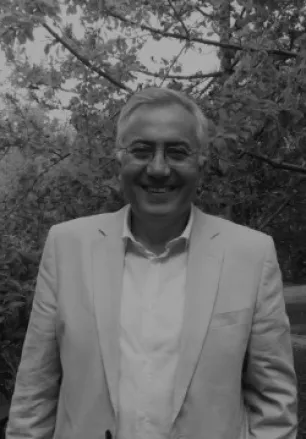
Nebi Sümer
Prof. Dr. Nebi Sümer holds a BA in Psychology from METU, an MA in Developmental Psychology from Hacettepe University and a PhD in Social Psychology from Kansas State University, USA.
nebi.sumer@sabanciuniv.edu