Climate Change
The Climate Change program has been one of IPC’s main research priorities since 2013. IPC’s Climate Change Program publishes policy papers and reports on the energy transition, green economy, mitigation and adaptation policies, and the economic impacts of climate change. The Climate Change program works in the following thematic areas.
The Climate Change programme works in the following thematic areas.
Mitigation | Climate Diplomacy | Adaptation and Resilience | Knowledge and Communication
 IPC’s Climate Change Program acts as a key platform to bring together stakeholders involved in climate action by providing opportunities for collaboration and dialogue with experts, academics, the public, civil society, and the private sector to increase the impact of actions on climate change. IPC represents Turkey in the Climate Transparency Network and the Mediterranean Alliance of Think Tanks on Climate Change (MATTCCh).
The Climate Change Program’s main research focus is to promote low-carbon SHURA ENERGY TRANSITION CENTER development, lead industrial decarbonization efforts—particularly in the steel sector—and contribute to the energy transition agenda by advocating for the gradual phase-out of coal. It also promotes a just transition to ensure that no one is left behind in the transition to a sustainable future. Through strategic partnerships with institutions such as Istanbul University – Cerrahpaşa, Boğaziçi University, and the National Institute of Public Health of Quebec (INSPQ), IPC has made significant contributions to understanding the health impacts of climate change.
#ClimatePolicies | #ClimateChange | #GreenTransition | #JustTransition | #ClimateAction
Networks
- Climate Transparency
- MATTCCh
Partnerships
- International Climate Politics Hub
- Climate Policy Lab
Gelecek Etkinlikler
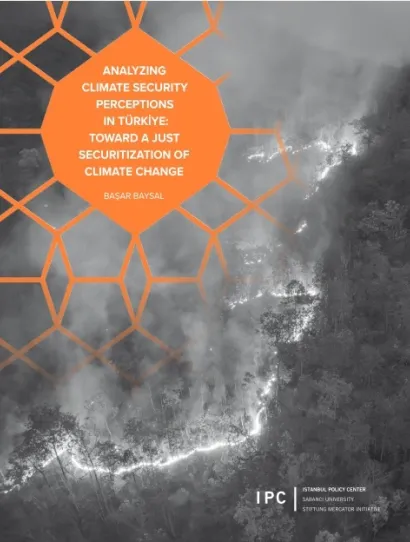
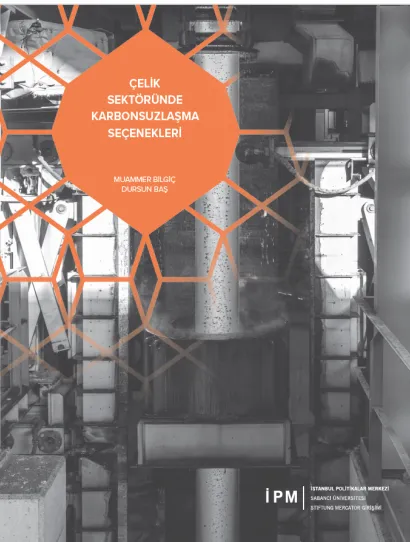
Long-Term Decarbonisation Trajectories for the Turkish Economy
Supported by the European Climate Foundation and carried out between 1 March 2020 and 30 September 2022, the project aimed to identify long-term decarbonisation trajectories for the Turkish economy and mainstream them into policymaking. It focused particularly on phasing out coal and other fossil fuels in the electricity sector.
The Decarbonization Pathways for Turkey (2 phases)
The Decarbonisation Pathways for Turkey project was carried out in two phases in partnership with the European Climate Foundation. The first phase ran from 1 March 2020 to 30 September 2022, and the second from 15 September 2022 to 14 July 2024. The project aimed to support the long-term decarbonisation of the Turkish economy, particularly the energy sector. Drawing on a global carbon budget consistent with the Paris Agreement’s 1.5–2°C temperature goals, it examined Turkey’s contribution to global emission reduction efforts in line with the principle of equity.
The Right to the Future Program
The Right to the Future Programme was established in 2019 by Sabancı University Istanbul Policy Center and the Raoul Wallenberg Institute at Lund University to promote a rights-based approach to climate action and strengthen the role of human rights and the rights of nature in climate policy.
COBENEFITS: Mobilizing the Social and Economic Co-benefits of Climate Action and Renewable Energy
The COBENEFITS project, implemented between March 2017 and September 2022, was funded by the German Federal Ministry for the Environment, Nature Conservation and Nuclear Safety (BMU) under the International Climate Initiative (IKI). The project aimed to identify the social and economic co-benefits of climate action and the transition to renewable energy, and to support their integration into public policy.
Green Climate, Green Economy
The Green Climate, Green Economy Project was implemented in 2016–2017 under the Civil Society Dialogue Programme, co-funded by the Republic of Türkiye and the European Union. With the Green European Foundation (GEF), Green Thought Association and Sabancı University Istanbul Policy Center as project partners, it aimed to promote knowledge exchange and lasting dialogue among civil society organizations, academics, and local governments in Türkiye and Europe.