
Can Cyclists and Pedestrians Form a Political Party? Examples of Sustainable Urban Transport and Transformation Processes
Can Cyclists and Pedestrians Form a Political Party?
In 2023, while living in Boston, USA, for a project, I was trying to find the most convenient way to commute to the university where I worked. A journey that took 25 minutes by car could take two or even three hours one way on some days using a combination of the subway and commuter rail. The train, which was supposed to run every hour, sometimes did not arrive at all, while the subway could be delayed by half an hour. While looking for alternative routes on the map app on my phone, I discovered that I could make the journey in 50 minutes by bicycle. I bought a bike and, except during the months of heavy snowfall, cycled to work along the Charles River, enjoying the magnificent scenery. Until about 15 years ago, Boston was not a bicycle-friendly city. However, things began to change when the mayor's doctor advised him to become more physically active. The mayor decided to try cycling to work and experienced firsthand how poorly cyclists were treated by drivers. That was when the transformation began. This process is still far from complete, and cycling associations and advocacy groups continue to push for more sustainable transportation. But why is a transformation in transportation necessary? Is it simply to allow cyclists to move around the city more comfortably? Or is it because of the problems created by the car-oriented urban planning that currently dominates our cities? What exactly are these problems? Beyond carbon dioxide emissions, which contribute significantly to climate change, and air pollution, drivers in cities designed primarily for private vehicles can lose a considerable amount of time sitting in traffic. In Istanbul, drivers spend the equivalent of "3.5 years of a person's lifetime"¹ on the roads. Each vehicle occupies an average of 14 to 28 square meters of space, and parking areas take up a significant portion of urban land, limiting opportunities to design public spaces around people's needs.The high number and speed of private vehicles also make walking and cycling dangerous in cities. Instead of designing cities with the well-being of their residents in mind, we design them for cars. Changing this may not be easy, but it is certainly not impossible.
Publication Date
January 2026
Number of Pages
3
IPC
Zeynep Kadirbeyoğlu
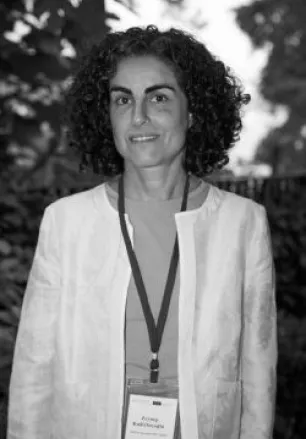
Zeynep Kadirbeyoğlu
Zeynep Kadirbeyoğlu is a political scientist with an interest in political ecology, decentralization, local governments, civil society organizations, and citizenship.
zeynep.kadirbeyoglu@sabanciuniv.edu