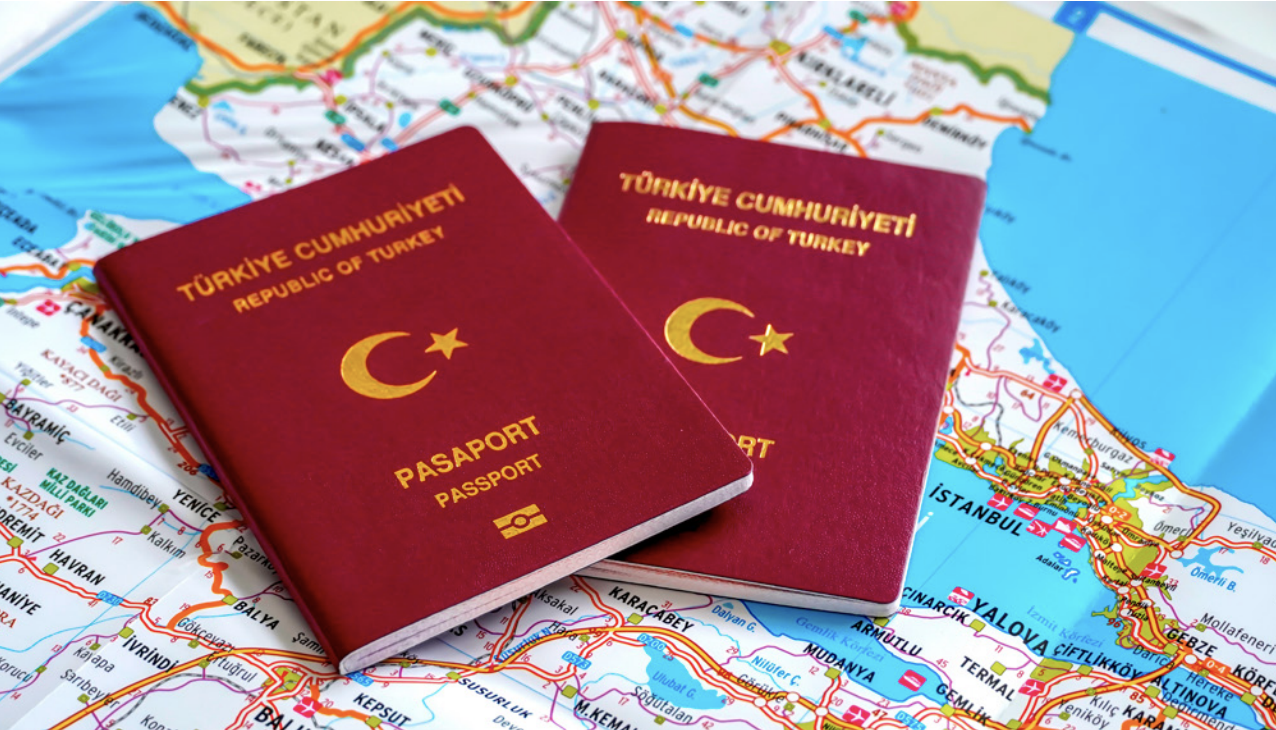
Connectivity Without Human Mobility: Turkey-EU Relations and the Political Limits of the Middle Corridor
The IPC-Mercator Analysis "Connectivity Without Human Mobility: Turkey-EU Relations and the Political Limits of the Middle Coridor" by 2025/26 Mercator-IPC Fellows Damla Bayraktar Aksel and Ali Baydarol was published.
Recent geopolitical disruptions have advanced the importance of the Middle Corridor as a key connectivity route linking Europe and Asia, renewing expectations of closer economic cooperation between the EU and Turkey. Yet, despite this push for infrastructural and logistical openness, the discourse of connectivity has emerged alongside increasingly restrictive human mobility regimes. This analysis argues that this contradiction is not economic but political: while the Middle Coridor advances the circulation of goods and capital, the mobility of people required to sustain these flows is governed through heightened securitization and administrative discretion amid a climate of political uncertainty, mutual mistrust, and stalled EU-Turkey relations. Focusing on the mobility of truck drivers and the integration of supply chains between Turkey and the EU, the analysis shows how visa barriers undermine connectivity and its potential economic gains.
Introduction
In recent years, two parallel developments have reshaped the governance of global trade and cross-border movement. On the one hand, growing geopolitical and economic uncertainty, most notably following Russia’s invasion of Ukraine, has driven states to pursue new trade and transportation routes. As the discourse on “connectivity” gains traction, such initiatives are framed as tools for diversification and risk mitigation amid state competition to secure strategic positions as hubs within reconfigured global supply chains. Paradoxically, on the other hand, this renewed emphasis on infrastructural openness has coincided with a marked trend toward political closure in liberal democracies, a problem that is particularly visible in the European Union’s (EU) mobility and migration regimes. The EU-Turkey relationship illustrates this contradiction clearly: despite deep economic integration, as EU-based firms constitute 70 percent of foreign direct investment in Turkey and generate nearly half of Turkey’s exports to the EU, mobility from Turkey into the Schengen area has become increasingly restricted.1 This is reflected in non-EU citizens’ persistent difficulties in accessing shortterm, work-related visas, including for truck drivers essential to cross-border trade. Therefore, seeing that restrictive migration regimes threaten to impede connectivity, it is against the backdrop of human mobility that the renewed prominence of the Middle Corridor should be examined. While an ambitious connectivity initiative projected by the World Bank to triple freight volumes by 2030,2 the corridor is advancing in the absence of a coherent framework for governing the human mobility required to sustain it.
The Middle Corridor in a Shifting Geopolitical Landscape
The Middle Corridor, formally known as the TransCaspian International Transport Route (TITR), has become a focal point of the emerging connectivity debates. It is a multimodal trade route that links China to Europe via Central Asia, the Caspian Sea, and the South Caucasus, with onward connections either through Turkey or across the Black Sea. While trade through this corridor previously accounted for less than one percent of China-Europe trade and functioned largely as a secondary regional route, a convergence of geopolitical disruptions and shifting trade priorities has rapidly elevated its strategic significance.3 The most decisive catalyst was Russia’s invasion of Ukraine in 2022. As such, EU-China container shipping via Russia declined by roughly 35% in 2023 compared to the previous year.4 The Middle Corridor emerged as the only viable east-west land route that bypasses both Russia and Iran, allowing major actors to diversify connectivity away from sanctioned territories. The corridor’s growing relevance has been further reinforced by the rerouting of maritime trade following the war in Gaza, as insecurity in the Red Sea diverted traffic toward the Cape of Good Hope, leading to an estimated 75% decline in ship transits through the Red Sea between 2023 and 2024, with effects extending into 2025
EU-Turkey Relations and the Limits of Selective Openness
This structural disconnect recalls James Hollifield’s seminal formulation of the “liberal paradox,” developed in the early 1990s against the backdrop of deepening global economic integration and the consolidation of liberal democracies in Western Europe and North America. At its core, the liberal paradox captures a persistent tension in migration governance between economic and political logics: integration into global capitalist markets generates pressures to accommodate labor demand and sustain openness, while electoral competition and securitized public debates push political leaders toward restriction and control. Subsequent scholarship has shown that states manage this paradox through differentiation rather than resolving this tension. In particular, Hein de Haas et al.13 demonstrate that migration regimes are inherently selective: openness and closure coexist through the categorization of migrants and mobility types, allowing states to expand access for some groups while tightening controls over others. Building on this insight, Katharina Natter shows that such selective openness is not confined to liberal democracies but characterizes mobility governance across regime types under contemporary conditions.14 Selectivity thus emerges as a core governing strategy through which states seek to capture the economic benefits while containing the social and political consequences of cross-border mobility.
Conclusion: Connectivity without Human Mobility?
The renewed prominence of the Middle Corridor is unfolding within a deeper and unresolved paradox at the heart of contemporary connectivity governance. While states increasingly invest in corridors as instruments of diversification and geopolitical repositioning, the governance of human mobility remains politically constrained and increasingly securitized, producing a structural contradiction in which openness for goods is actively decoupled from openness for the people required to move them. Drawing on the liberal paradox and subsequent scholarship on selectivity, the analysis shows that states have historically managed this tension not by choosing between economic integration and political closure, but by institutionalizing selective openness, facilitating economically functional forms of mobility while restricting others. The Turkey-EU case, however, indicates that this logic is no longer operating as intended, as current Schengen practices increasingly collapse different types of mobility into a single restrictive policy field. In this sense, it does not merely confirm the liberal paradox: it points to its mutation, in which the very mechanisms designed to manage the coexistence of openness and closure are themselves eroding under heightened securitization and populist pressure. The implications for corridor-based connectivity are therefore substantial. Although the Middle Corridor is increasingly presented as a logical response to mounting uncertainty along northern and southern routes, its viability depends not only on railways, ports, and infrastructure, but on safe, orderly, and regular mobility.
Publication Date
January 2025
Number of Pages
10
On Behalf of IPC
Damla B. Aksel
Ali Baydarol