Local Dynamics in Local Governance – From the Cities of Turkey to a Turkey of Cities
Executive Summary
Cities are one of the most important elements defining today's world, and their economic, political and cultural backgrounds will continue to play a significant role in shaping the future. The dynamics blended in cities since the late 1970s have become increasingly pivotal in the transformation of national economies and political structures around the world. Population scientists at the United Nations have coined the term "urban age" in order to express the increasing prominence of cities. Today, over half of the world's population lives in rapidly growing cities. Moreover, the rapid population growth is much more striking in non-Western countries. The trend that we are witnessing has the power to dramatically transform every aspect of social life, from the organization of production to the mechanisms and institutions of governance, and from ecological processes to lifestyles. This is precisely why we are simultaneously faced with new potentials and complex problems. The need to understand these potentials and threats has led the academic community, policy-making institutions and civil society actors worldwide to observe, interpret and guide the effects of the multidimensional transformation processes that arise around cities.
Turkey, whilst not staying out of this trend and development, has a striking position and dynamics in the field of urbanization. Urbanization is not only critical in the context of geographic and economic growth, but also at the heart of the country's current dynamics and its future in terms of local governance. In a sense the trends we are witnessing on a global scale are also reproduced in Turkey, however the potentials and conflicts brought about by this trend are experienced in a more severe manner. Therefore understanding the transformation of urban areas, especially the transformations that took place in the 2000s, are key to understanding today's Turkey and shaping the country's future.
This report, "Türkiye'nin Kentlerinden Kentlerin Türkiye'sine," includes the second stage of our research. In the first report, published in 2017, 12 cities (Ankara, Eskişehir, İzmir, Bursa, Adana-Mersin, Antalya, Gaziantep, Kayseri, Konya, Diyarbakır, Van and Samsun) were analyzed based on urbanization and city-region concepts. In the second stage, research has been conducted through focus group meetings, interviews and expert meetings in İzmir, Konya, Adana-Mersin and Van. These cities have been selected due to their connection to the global economy, local and regional importance, socio-economic features and their potentials.
In this report, we aim to reveal the nature of the relationship between local scale power relations and economic structures, through the analysis of the governance styles and processes that have emerged in the selected cities. Furthermore, our research also aims to identify what kind of principles local governance needs to be built on in order to make local development more effective and sustainable, and to ensure that urban residents become more active in democratic participation mechanisms. In this context, our study puts forth hypotheses about how governance processes are established in İzmir, Konya, Adana-Mersin and Van, how the changing economic contexts of cities redefine power relations, and about the character of the relationships within and across key local and national decision makers. While the debates on decentralization/local governance, though in a very limited framework, are on the agenda nowadays, we also aim to create a basis for some of the normative claims in this debate.
As a result, the issues which are essential in the process of uncovering potentials, and making urban and economic growth inclusive and sustainable, contain a political restructuring as well as an effective establishment of urban coalitions and a consensus between the local and central. Basic issues, from public works to incentive policies, are of critical importance to Turkey's cities and still have a long way to go. In the context, there is a need for both pluralistic institutions with a capacity to democratize urban governance networks and intervene local economic agenda creatively, and local governance reform to shift the authority to locals in real terms. The political polarization and the distrust it causes also limit the efforts to improve the investment environment on an urban scale. Just as it is on the national scale, this polarization is also decisive on the local scale. Macro political processes are directly related to the impact and influence of inclusive and sustainable economic growth and the quality of urban life, whether from the cities to Turkey or from Turkey to the cities. However, as this report tries to indicate, analyzing the distinctive dynamics of cities in different areas, such as their economy, urban growth, governance and culture will make a scientific and practical contribution to policy-making process.

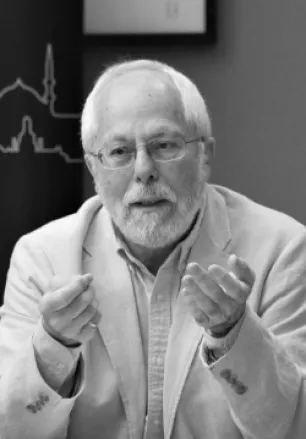
Fuat Keyman
Fuat Keyman is the Director of the Istanbul Policy Center; Vice President for Institutional Affairs and Social Impact, and Professor of International Relations at Sabancı University. Keyman is a leading political scientist in Turkey and an expert on globalization, democratization, international relations, Turkey – EU relations, Turkish foreign policy, and civil society development.