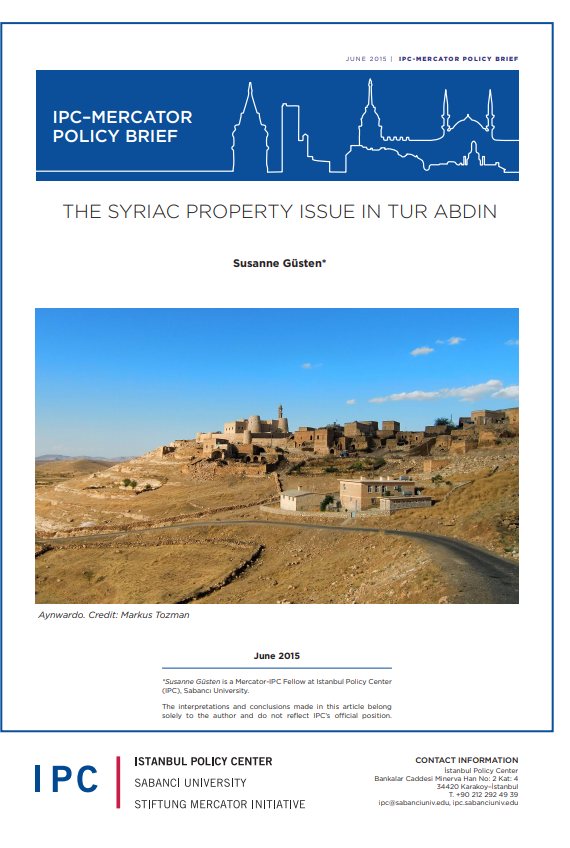
The Syriac Property Issue in Tur Abdin
Executive Summary
The 21st century has brought new hope to the non-Muslim communities of Anatolia, who have endured oppression, massacres, forced displacement, rights violations, and discrimination for more than a century. For over a decade, the Turkish government has adopted an approach emphasizing diversity, multiculturalism, inclusiveness, and equal rights for all citizens regardless of race or religion, although these principles have not yet been fully implemented. Former Prime Minister and current President Recep Tayyip Erdoğan summarized this approach by stating that “all kinds of differences are a source of richness for us, and everyone is equal.” Although consistency in implementing these policies has not always been achieved and recent progress has slowed, significant practical improvements have been made in recognizing minority rights and freedoms.
However, Turkey faces the risk of losing a significant part of its cultural heritage. The Syriacs, one of the oldest indigenous peoples of Anatolia, are confronting the possibility of disappearing from their ancestral homeland. This Christian minority, which was forced to leave Anatolia over the past century, is now struggling to maintain its presence even in Mesopotamia, where it has existed for thousands of years. The crisis has been intensified by the persecution, massacres, and displacement of Syriac communities in neighboring Iraq and Syria, creating uncertainty regarding the future of Syriac Christianity in the region.
As the future of Syriac Christianity in Iraq and Syria remains highly uncertain, Turkey has a crucial role in ensuring the survival of this ancient community in its historical homeland. Immediate action is therefore required. However, many of the challenges faced by Syriacs in Anatolia are closely connected to broader political processes, including the establishment of a more pluralistic constitution in Turkey and the continuation of the peace process aimed at ending the armed conflict with the Kurds.
While these long and complex processes are unlikely to provide rapid solutions for the Syriac community, Turkey can take immediate and practical steps to address urgent issues. One of the most important measures would be resolving disputes related to the expropriation and forced seizure of minority-owned properties during recent cadastral surveys in Southeastern Anatolia.
Publication Date
May 2015
Page Count
20

Susanne Güsten
Susanne Güsten has been working in Turkey as a journalist for international media since 1997. She has taken a special interest in the return of Syriacs from the diaspora to the region of Tur Abdin since the beginning of 2001.
guesten@weltreporter.net