Executive Summary
In Turkey, there are numerous debates and disputes regarding the degree of polarization that intensified after the July 15 coup attempt, both among the public and the elites. This report examines the causes of polarization in Turkey by focusing on the views of the elites on political polarization. Rather than measuring the level of polarization among the public, this report examines the views of Turkey's elites on the increasing polarization claims in the country. To this end, the report analyzes the results of a closed workshop and in-depth qualitative interviews conducted with specific political elites on the issue of polarization in Turkey. The report argues that Turkey's elites are so polarized that they cannot even agree on whether polarization exists in the country. Using the information gathered from the workshop and interviews, particularly regarding the alleged causes of polarization and possible solutions to combat it, some policy recommendations are presented with the hope of achieving social reconciliation in Turkey.
Introduction
Polarization among the public refers to the significant division among voters regarding their attitudes towards social and political issues, oriented along partisan lines. Numerous debates about polarization in Turkey in recent years have intensified due to the July 15th coup attempt. There is a growing consensus in the literature that the Turkish population is currently more polarized than ever before on many political and cultural issues, including economic policy, democracy, secularism, and foreign policy. This wave of polarization, linked to numerous factors ranging from rising populism to partisanship in the media, has significant consequences, including increased political deadlock that fuels the concentration of power; decreased ability to adapt to economic, social, and demographic trends; increased social and political discontent; and negative impacts on economic development.
Results
As a result, it can be argued that the elites in Turkey are so polarized that they cannot even reach a consensus on whether polarization exists in the country. Using the information about the causes of polarization expressed in the workshops and interviews and possible solutions to combat polarization, the following policy recommendations can be presented in the hope of achieving social reconciliation in Turkey:
• Discourse is important in the functioning of politics and its effects on society: Since it has been determined that the partisan language used by politicians generally increases polarization, it is important for politicians to choose a more inclusive language that does not label the "Other(s)" as enemies and protects all segments of society.
• The same approach applies to media discourses. It is widely stated that the partisan language used by the media is a factor that increases polarization among different political groups. In fact, this is one of the rare issues that make elites from different political backgrounds feel united, regardless of their differing views on the extent of polarization in the country, and draws attention to the importance of press freedom and the use of inclusive language in the media. However, it should not be forgotten that media is no longer limited to classical channels. In the new media environment, anyone can become a reporter instantly. Therefore, social media ethics lessons should be given at early ages and citizens should be made aware of their responsibilities in using social media.
• It has been proven that the decrease in the credibility of public institutions as a result of partisan appointments to state positions and ideological decision-making mechanisms increases polarization. For this reason, in the reconstruction of institutions in post-July 15 Turkey, utmost importance should be given to establishing inclusive institutions, creating staff on the basis of merit and ensuring the rule of law.
• Education is inclusive: It is seen that polarization increases when access to quality education weakens. For this reason, there is a need for a radical national education reform, including measures against national education moving away from secularism and increasing privatization in secular education. Social pluralism and the secularism of the state should be guaranteed by a fundamental reform in the education system.
• Violence (physical or cultural) divides and polarizes; Therefore, political problems should be discussed without resorting to violence. The attitude of turning ethnic and religious identities into security issues and crimes should be completely abandoned.
• As many cases show, polarization of elites is known to occur before polarization of the public. Since elites have various communication channels among themselves, necessary measures should be taken to ensure that these mechanisms are effective in advancing inter-elite dialogue. In particular, legislative bodies such as parliamentary commissions should be made more effective. In addition to all these measures, efforts should be made to diversify the channels of dialogue between different segments of society.
• The prerequisite for efforts to achieve social reconciliation in Turkey is a new constitution based on equal citizenship. Such a constitution would lay the much-needed legislative infrastructure for social inclusion and democratic institutions that would help reduce polarizing tensions in society. Implementation will be critical for the effectiveness of the new constitution.
• In today's world, it is no longer possible to completely separate domestic policy from foreign policy activities. This conclusion is especially valid for Türkiye-European Union (EU) relations, which have suffered from significant stagnation in the past decade. Despite the deteriorating relations between the two parties at the macro level, the potential role of the EU in promoting democracy and calming polarization in Turkey was expressed by different participants of the closed workshop. Revitalizing Turkey's relations with the EU could help strengthen the EU anchor for the benefit of Turkey's domestic political reforms and ultimately strengthen democracy and weaken the level of polarization in the country.
Publication Date
April 2017
Number of Pages
14
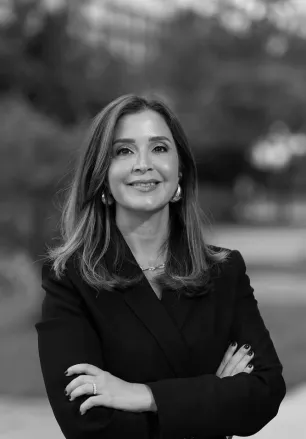
Senem Aydın Düzgit
Senem Aydın-Düzgit is the Director of Istanbul Policy Center and a Professor of International Relations at the Faculty of Arts and Social Sciences at Sabancı University.
senem.aydinduzgit@sabanciuniv.edu